My Proven Poker Strategy Methods

When you sign up through links on our site, we may earn a commission at no cost to you. Full affiliate disclosure and editorial process.
I’ve been writing poker strategy content for more than 20 years, revealing the methods I’ve used to become a long-term winner. You can read all of my strategy guides and cheat sheets below, completely free. You’ll also find dozens of strategy articles containing actionable poker tips for beginners to advanced players.
Table of Contents
- My poker strategy philosophy
- Don’t sleep on online-only poker strategy
- No-Limit Hold’em cash game strategy
- Poker strategy for specific hands
- Poker strategy for Texas Hold’em
- Poker strategy for beginners
- Poker strategy FAQs
- What is poker strategy?
- What is the best poker strategy?
- What can I use as a poker strategy guide?
My poker strategy philosophy
With poker strategy having been done so well already by pros and journalists alike I’ve tried to take a little bit of a different approach in my guidance for players.
I try to give special consideration to what works online and write in an accessible fashion without being too generic and simplistic.
I also don’t include a whole lot of math beyond pot odds and the odds of hitting hands in specific scenarios.
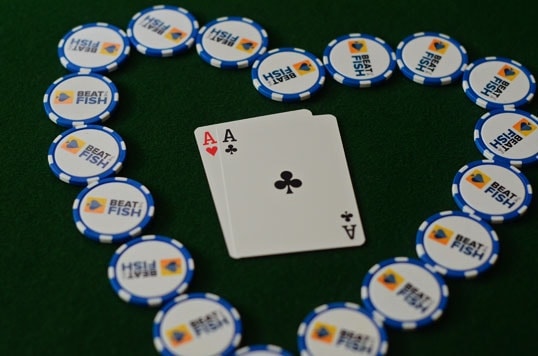
Advice like “Avoid trap hands and play conservatively from early position.” is only useful to the most inexperienced players, but a bottom-line tip like, “Pocket pairs become more valuable against early position raisers,” might actually be useful.
I believe in giving bottom-line methods that you can easily incorporate into your game.
I believe the most useful strategy can be understood by beginners yet give a useful tidbit, serve as a plug for a potential leak, or offer a new perspective that may still help intermediate and advanced players.
Don’t sleep on online-only poker strategy
Even though the game remains the same online poker strategy introduces some unique wrinkles, advantages, and disadvantages. Physical tells don’t exist, but can anything be deduced by how your online opponent acts?
Can you use technology to give you a strategic advantage? What about game modes that are online-exclusive? Where relevant, I address these online-specific poker strategy tweaks that are ignored by mainstream strategy pros.
No-Limit Hold’em cash game strategy
This section focuses exclusively on poker strategy for No-limit Hold’em cash games. They have become the most popular game in poker and where the majority of professional players earn their profits.
Tournaments are fun and do a great job at capturing suspense and glory, but are uniquely difficult to cash in consistently. Tournaments for show, cash games for dough.
Poker strategy for specific hands
Certainly every table situation varies depending on if you’re in a cash game or tournament, the strength of your opponents, and your stack size. However, specific hands come up so often that it can be helpful to have a rough strategy guide in mind for how you’re going to play it.
Poker strategy for Texas Hold’em
Texas Hold’em is a rather complex game, so describing a correct and efficient strategy in just a few paragraphs is impossible. There are, however, certain things you need to know about the strategy for the “Cadillac of Poker,” as Texas Hold’em is often referred to.
First and foremost, poker is largely based on math. Knowing pot odds and percentages for certain draws is of the utmost importance if you want to play a solid game. Apart from that, you also need to know that your position at the table in relation to the dealer’s position makes a huge difference. You want to play hands “in position” as much as possible.
On top of all this, other people, your opponents at the table, play a huge role in determining the right poker strategy. Sometimes you will want to be as aggressive as possible, at other times you will be the silent one, waiting for your chance.
The strategy for tournaments and cash games can also be very different, so that’s another thing you need to keep in mind if you are transitioning from one format to the other.
Poker strategy for beginners
Many things stated in the answer above this one also deal with the poker strategy for beginners. Starting with poker isn’t easy because there are so many things one needs to understand and come to terms with before sitting at the table.
For those completely new to poker, here’s a few strategy tips that should keep you out of the harms way.
Tight is right.
While more experienced players can afford to play a wilder, looser style, until you’ve garnered some experience with the game, your best bet is to play only the strong hands and play them fast.
When you have a monster, don’t try to be tricky with it since you are probably not capable of putting your opponent on the hand correctly. Just keep betting and raising, making sure you don’t allow anyone to catch up for cheap.
Bluffing is overrated.
While bluffing is undoubtedely an important part of poker, what you may have seen or heard about on TV or from your friends doesn’t necessarily correspond with the reality. Pulling a big bluff does feel great but at the same time it can be very costly.
Poker strategy for beginners should include very little, if any, bluffs. The time will come when you will be able to read the hands better and assess the situations correctly. Only then will your bluffs make sense.
Don’t get emotional.
This is not a poker strategy advice per se, but poker is a game of emotions as well. What you need to understand as a beginner is that odds are you will be losing at first. That’s nothing to worry or get upset about. If you are determined to keep learning and improving, the results will come.
There are plenty of resources right to help you get better.
Make use of everything you can get your hands on, including numerous poker books, which cover different areas of strategy, from beginner’s concepts to very advanced plays.
Also, an entire industry has spawned from poker players looking to improve their strategy in the easiest way possible. Numerous sites dedicated to poker training have sprung up, teaming up with professional players and step-by-step instructions, usually for a monthly fee.
Poker strategy FAQs
What is the best way to learn?
Like anything else, the best way to learn poker strategy will depend on your preferred way of learning in general. For some, reading strategy articles and books will be of great value, while others will enjoy watching poker videos and gathering the information that way. Also, using poker forums to ask questions and exchange opinions should help you advance much faster.
Can poker strategy be learned by just playing?
While this is not completely impossible, learning just from your experience can be a rather lengthy, painful, and expensive process. You will probably need to have some talent as well if you want to learn just by playing. The best chess players in the world, despite their natural talent, have, for the most part, spent thousands of hours studying the game. Another trap of learning from the experience is that you could “learn” certain things completely wrong without even knowing it. These mistakes in poker are usually known as leaks.
What is the main difference between poker strategy for tournaments and cash games?
While both cash games and tournaments follow the same rules in terms of the game itself, the main difference is the amount of chips you have in front of you on average. Cash games usually play deeper, with players always having at least 100 big blinds in front of them. Since blinds stay the same for the entire duration of the session, the stack to blind ratio never changes.
In tournaments, due to blinds increasing over time, the stack to blind ratio changes constantly. Also, since you are not allowed to buy more chips (in most tournaments, at least), your stack size varies greatly and this requires the ability to adapt quickly. Playing with a stack of 30 big blinds is vastly different to playing 200 big blinds deep.
How long does it take to learn a proper poker strategy?
There is no simple answer to this, as it depends greatly on numerous factors. For one, some people will be able to adopt poker strategy concepts faster than the others. Apart from this, poker strategy is a wide term, as even talking about just No Limit Hold’em, there are numerous game formats and learning the proper strategy for some of them is quite simple, while some others are extremely complex.
How should I start learning poker strategy?
Assuming you already know the rules of the game, your next step would be understanding the basic math calculations behind the game. This is a very important first step before going further into detail. After that, you can start exploring different playing styles and understanding hand ranges, as this will help you structure your knowledge much better.
As mentioned in the question above, there are many different game formats, so your best bet would be focusing on learning strategy for one of them first and than expanding to other formats (if you wish) once you’ve obtained a decent grasp of the first one.
What is poker strategy?
Simply put, poker strategy is a set of rules and definitions which tell you how you should optimally play your hands. It covers different aspects of the game, from your position at the table, selecting your starting hands, playing different stack sizes, and adjusting your plays according to your opponents’ tendencies.
Despite what you may think, if you don’t know anything about the game, the poker strategy is a vast area filled with math, probability, and psychology. In fact, the game of poker is so complex that no one has of yet come up with the perfect strategy that would be the answer to all possible situations and circumstances.
What is the best poker strategy?
While it is impossible to give an absolute answer to this (see above), the generally accepted consensus is that the best poker strategy is what is known as TAG (short for tight-aggressive). The advantages of this strategy are that it makes your decision making process simpler and for the most part it keeps you out of trouble. It advocates playing strong hands and profiting from other players’ mistakes.
However, with the development of the game, players and poker writers have come up with different approaches as well. Many highly successful players today are leaning towards LAG (loose-aggressive) playing style. While this may not be the optimal playing style from the purely mathematical standpoint, it is the one that puts a lot of pressure on your opponents and constantly forces them to make tough decisions.
So, the answer is probably somewhere in-between. Playing a standard TAG style, mixed with some bold loose moves at the right time and against the right opponents can get you far.

What can I use as a poker strategy guide?
As mentioned in one of the earlier questions, figuring out your preferred poker strategy guide boils down to what you enjoy the most. With the vast amount of resources in written, video, and even audio-only form, you can pick anything you want to help you deepen your strategy knowledge.
Those completely new to poker would probably do best to pick one of poker books and start their journey there, simply because many of these books have a very good organization and will guide you step by step. After you’ve created a solid foundation, you can move on to other methods of learning.
Reading poker strategy articles, like the ones found right here at Beat The Fish, can also serve as an excellent poker strategy guide.

Joshua is one of the world’s most respected online gambling experts. He has been featured on outlets such as CardPlayer, the World Poker Tour, Google News, and Forbes. Joshua has nearly 20 years of experience reviewing poker rooms, casinos, and online sportsbooks. He launched Beat The Fish in 2005, which has been peer-certified as a trustworthy gambling portal. Josh’s proven systems and extensive knowledge of the iGaming industry have been used by thousands of online bettors to make more informed decisions.